OFF GRID FARM
AREA: 50,000 sq meters
Stage: Completed
July, 2024
Top 10 Horoable Mention Worldwide
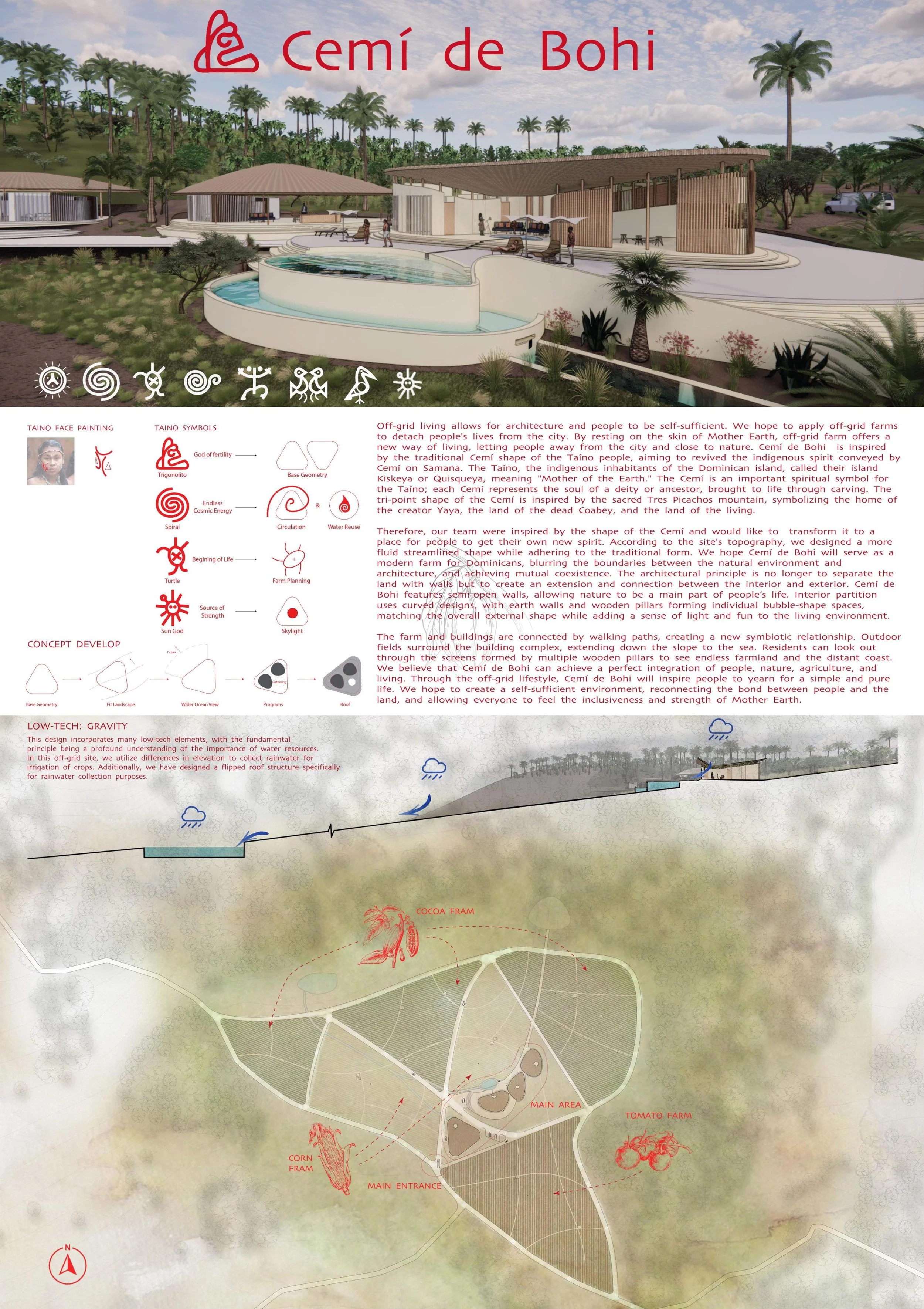
Off-grid living enables both architecture and its inhabitants to achieve a state of self-sufficiency. By disengaging daily life from urban dependency, off-grid farms propose an alternative mode of living—one that repositions human activity in closer alignment with nature. Rooted in the terrain of Mother Earth, this project explores a lifestyle that distances itself from the city while fostering a direct relationship with the natural environment.
Cemí de Bohí draws its formal and conceptual inspiration from the traditional Cemí of the Taíno people. The design seeks to reinterpret and revive the indigenous spiritual values embedded in the Cemí, particularly those historically present in Samaná. The Taíno—indigenous inhabitants of the Dominican island, whom they called Kiskeya or Quisqueya, meaning “Mother of the Earth”—regarded the Cemí as a vital spiritual symbol. Each Cemí embodied the soul of a deity or ancestor, brought into existence through carving. Its characteristic tri-point form originates from the sacred Tres Picachos mountain, representing the dwelling of the creator Yaya, the land of the dead (Coabey), and the land of the living.
Guided by this symbolic framework, the project transforms the Cemí form into a contemporary spatial environment intended to cultivate renewal and spiritual connection. Responding to the site’s topography, the traditional geometry is reinterpreted through a more fluid and streamlined architectural expression, preserving its cultural essence while adapting to the landscape. Cemí de Bohí is envisioned as a modern agricultural settlement for Dominicans—one that dissolves the conventional boundary between architecture and nature and promotes a condition of mutual coexistence.
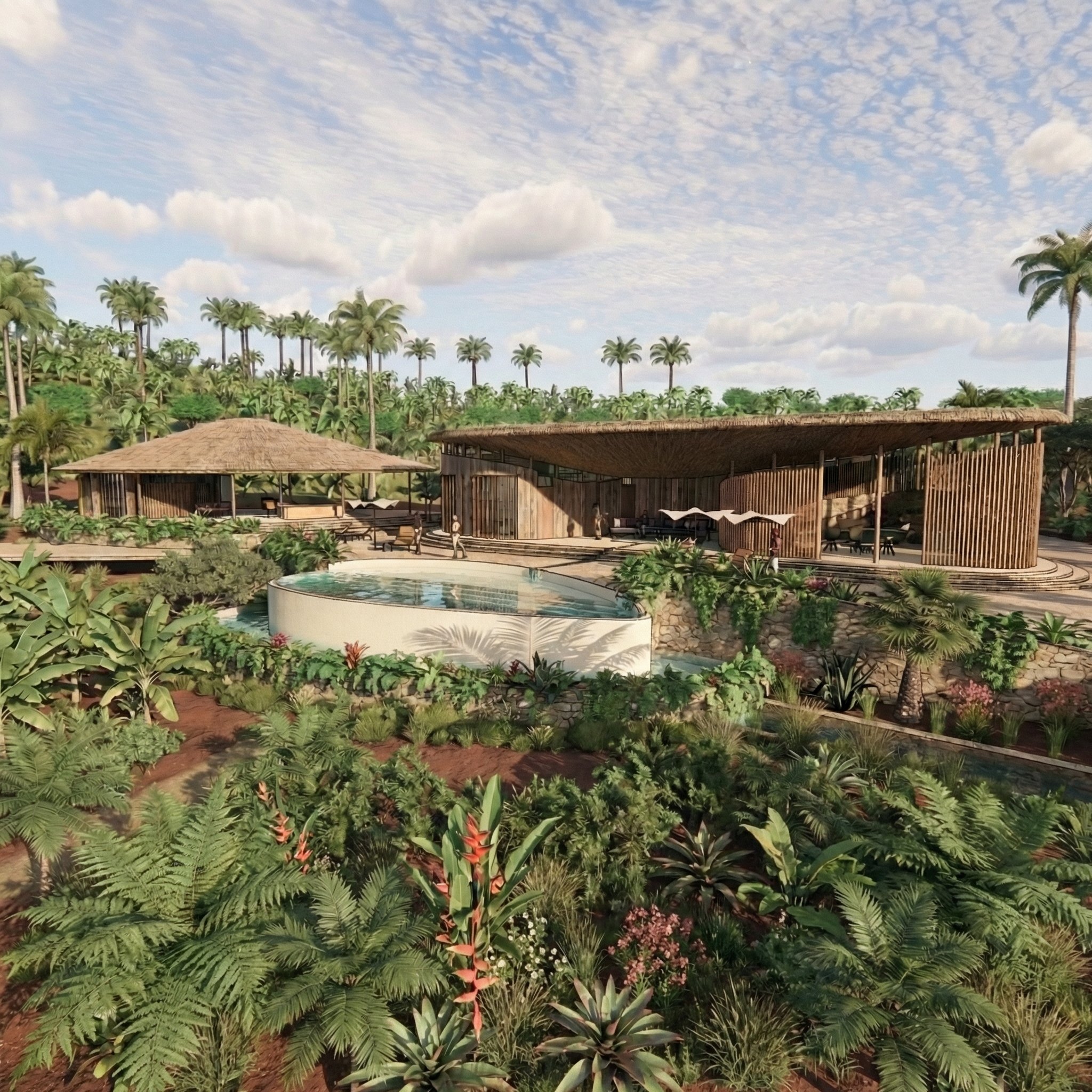
Rather than separating land and building through rigid enclosures, the architectural strategy emphasizes continuity and permeability between interior and exterior spaces. Semi-open walls allow nature to permeate daily life, while interior partitions adopt curved geometries. Earth walls and wooden columns define individual bubble-like spatial units, echoing the overall exterior form and introducing a sense of lightness and playfulness within the living environment.
The buildings and agricultural fields are interconnected through a network of pedestrian paths, establishing a symbiotic relationship between habitation and cultivation. Outdoor fields extend beyond the building complex, descending along the slope toward the sea. Through layered wooden screens formed by structural columns, residents are afforded uninterrupted views of expansive farmland and the distant coastline.
Cemí de Bohí aspires to achieve a holistic integration of people, nature, agriculture, and living. Through its off-grid framework, the project advocates for a simpler, more grounded way of life—one that reestablishes the bond between humans and the land, while embracing the inclusiveness and enduring strength of Mother Earth.